


The ESG approach focuses on the practices of business organizations in the areas of Environment, Social, and Governance.
It represents a framework through which organizations take responsibility for their actions and the conduct of their business, while promoting greater transparency in their operations. An ESG strategy should highlight the impact the company has on its employees, customers, the global community, and the environment.
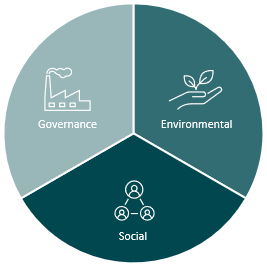
Environmental
The organization’s environmental impact and risk management practices encompass a variety of concerns, including climate change, greenhouse gas emissions, waste, and pollution, among others.
Social
The relationships established with stakeholders and the organization’s impact on the communities where it operates are of considerable importance. This context requires a constant focus on human rights, fair wages, working conditions, and a range of other relevant issues.
Governance
The way the organization is led and managed is a crucial aspect, encompassing the analysis and understanding of various elements, such as executive compensation, the diversity and structure of boards of directors, tax strategy, as well as the identification of potential instances of bribery and corruption, among others.
The Importance of Integrating ESG Factors into Your Strategy
The world is constantly changing, making it essential for organizations to adapt and respond to new challenges and market demands. Increasingly, companies must be prepared to incorporate ESG factors into their strategy.
Materiality
This concept helps companies focus their efforts on aspects that impact the success of their business. It is recognized that ESG factors can influence a company’s risk and return. These factors are increasingly taken into account in investment decisions.
Market Demands / Market Trends
Organizational transparency is increasingly valued by customers and stakeholders. Investors are increasingly considering non-financial factors in their investment assessments and decisions. They also recognize the risk associated with companies’ failure to manage these factors and the impact this has on the company’s reputation and value.
Regulation
Various documents have been developed to serve as guidance for organizations to incorporate ESG factors into their strategy. Currently, large companies and those in the financial sector are already required to submit a non-financeiro.
ESG Services
We offer a wide range of specialized services to help your company achieve its business objectives in an ethical and sustainable manner.
Our ESG Advisory team provides the following solutions:
- Sustainability reports
- Double Materiality Analysis
- KPI monitoring
- Strategic sustainability plans
- ESG Due Diligence
- ESG Assessment
- ESG Advisory
AMBIENTAL
- Carbon Footprint Calculation (Scopes 1, 2, and 3)
- Environmental Due Diligence
- Social and Labor Due Diligence
- Social Impact Management and Community Engagement
- Diversity, Equity, and Inclusion Programs
- Pay Gap Assessment Plan
GOVERNANCE
- Establishment and implementation of sustainability and governance committees
- Development of codes of conduct and integrity policies
- Integration of ESG criteria into financial management
- Mapping and strengthening of organizational culture from an ESG perspective
Please contact us to find out how we can help you build a more sustainable and ethical future for your business.
SOCIAL